Building AI Workbench Lab in Public: What I’m Learning
A practical behind-the-scenes look at building AI Workbench Lab in public, from Blogger migration and Next.js development to SEO measurement and useful AI resources.
Published: June 2026 · Updated: September 2026
AI Workbench Lab is a practical experiment: build useful AI and website resources in public, measure what works, and share the lessons without pretending every decision is perfect.
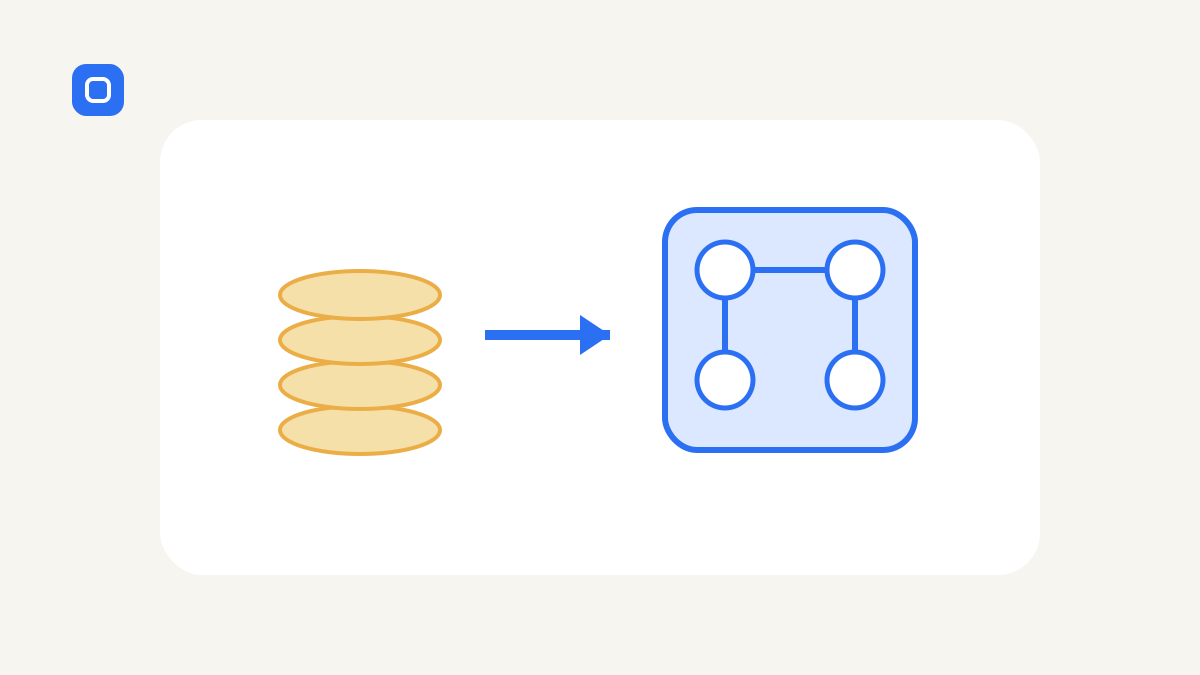
The project began as a simple Blogger site. It is now a Next.js website with migrated articles, practical resources, technical SEO foundations, and early search data in Google Search Console.
This page explains what I am building, why I chose to work in public, and what the process has taught me so far.
What Does “Building in Public” Mean Here?
For AI Workbench Lab, building in public means showing the real process behind the website:
- why I chose one platform over another
- how I moved existing content without abandoning its search history
- which SEO changes I made and how I measure them
- where AI helped, where it created more work, and what I changed
- how a small website develops from a collection of posts into a useful resource
It does not mean publishing every private detail or chasing attention with daily updates. It means turning practical project work into clear lessons that another person can reuse.
Why I Started AI Workbench Lab
Artificial intelligence is changing how people write, research, build websites, automate tasks, and operate small businesses. But the number of new tools can make it difficult to know what is genuinely useful.
I created AI Workbench Lab to focus on the part that matters after the excitement: using AI to complete real work.
The site is for beginners, independent creators, and small business owners who want practical explanations rather than a constant stream of product announcements.
My goal is simple:
Make AI, SEO, and website technology easier to test, understand, and apply in everyday work.
The Project So Far
1. Starting simply on Blogger
Blogger made it possible to publish quickly without spending weeks on infrastructure. That was useful at the beginning because the most important task was learning what I wanted to write about.
Starting on a simple platform also exposed the limitations that eventually mattered: design control, content structure, internal linking, reusable components, and the ability to build resources beyond ordinary blog posts.
2. Migrating 14 posts to a custom website
When I moved the site, I did not want to copy and paste the visible text and forget everything else. A content migration affects URLs, metadata, images, internal links, redirects, and search signals.
I migrated 14 existing Blogger posts, reviewed their structure, preserved the useful content, and mapped old addresses to appropriate destinations.
The full process is documented in How to Migrate a Blog Without Losing SEO.
3. Rebuilding with Next.js
The current site uses Next.js because it gives me more control over page structure, metadata, components, performance, and future interactive resources.
That flexibility comes with responsibility. A custom website still needs clear navigation, accessible pages, valid metadata, reliable redirects, a sitemap, and a useful mobile experience. Technology alone does not create search visibility.
You can see the practical stack and the reasons behind it in My AI Website Stack in 2026.
4. Building resources, not only articles
Articles are useful for explaining a process, but visitors also need tools they can act on immediately. That led to resources such as the Technical SEO Checklist for Google, the Practical AI Prompt Library, and the AI Website Launch Checklist.
The long-term direction is to combine first-hand case studies with checklists, templates, and small tools.
5. Measuring early Google visibility
I connected the site to Google Search Console and began tracking impressions, clicks, queries, indexed pages, and average position.
Early impressions are not the same as established traffic. They are signals that Google has discovered pages and is testing where they may be useful. The correct response is not to change everything at once. It is to improve the pages already receiving impressions, strengthen internal links, and compare results over time.
What I Have Learned
Useful content needs a clear search purpose
A page can be well written and still be difficult for search engines or visitors to understand. Each important page needs one clear purpose, a descriptive title, a direct opening answer, and supporting sections that match the reader’s next questions.
Redirects are part of content quality
Old URLs do not disappear simply because a website has been redesigned. Permanent redirects help visitors and search engines reach the best current page. Redirect chains, irrelevant destinations, and abandoned 404 pages create avoidable friction.
Internal links should guide a real journey
Internal links are most useful when they answer “what should I read or do next?” A migration article should lead to a technical SEO checklist. A website stack article should lead to launch checks. An AI guide should lead to a practical resource.
Search Console data needs patience
Small sites often begin with impressions at low positions and few or no clicks. That is not proof that the work failed. It is a baseline.
I now look for:
- which pages receive impressions
- which search terms trigger those pages
- whether the page really answers those terms
- whether titles and descriptions are accurate and attractive
- whether the visitor has a clear next step
- whether changes improve results over several weeks
AI works best with human review
AI can help with structure, drafts, code, comparisons, and repetitive checks. It can also produce confident mistakes, generic writing, or unnecessary complexity.
The most reliable workflow is to give AI a specific task, verify the result, test the real page, and keep human responsibility for the final decision.
What You Will Find on AI Workbench Lab
The site focuses on:
- practical AI workflows and prompting
- AI-assisted website building
- technical and on-page SEO
- Blogger and content migration
- automation and productivity
- small business technology
- real experiments, mistakes, and measurable improvements
You can browse the complete resource library or read the latest project articles.
What Comes Next
The next stage is less about adding random pages and more about improving the useful foundation:
- strengthen pages already receiving search impressions
- publish practical resources based on real project work
- improve internal links between related articles and checklists
- monitor Search Console results before making large changes
- prepare the site for AdSense only after content, trust, and navigation are strong enough
Final Thought
Building in public is valuable when the work produces evidence, not just updates.
AI Workbench Lab will continue to document what was built, what changed, what failed, and what another person can apply to their own website or workflow. If a lesson saves someone time or helps them avoid a preventable mistake, the experiment is doing its job.